
Massachusetts Bat Exclusion: Why Late Summer is the Perfect Time
If you’ve heard scratching noises in your ceiling or noticed guano accumulating around your roofline, you might be sharing your Massachusetts home with a colony of bats. While bats are incredibly beneficial to our local New England ecosystem—eating thousands of mosquitoes and agricultural pests every single night—they absolutely do not belong in your attic.
When homeowners in towns like Hamilton and Wenham discover bats, their first instinct is often to get them out immediately, regardless of the season. However, wildlife control is heavily regulated in Massachusetts, and timing is everything. Late summer (specifically August and September) is actually the only proper time to perform bat exclusion. Here is a deep dive into why timing matters and how the exclusion process works.
Understanding the Bat Maternity Season
In Massachusetts, the most common bats found in residential homes are Little Brown Bats and Big Brown Bats. During the early summer months (June and July), female bats gather in dark, hot, protected spaces—like your attic—to form maternity colonies.
Unlike mice that have litters of several babies multiple times a year, bats reproduce very slowly. Each female bat typically gives birth to just a single pup per year. During this maternity season, the baby bats are flightless and entirely dependent on their mothers for nursing.
If a pest control company or a homeowner were to seal the entry points to the attic in June or July, the mothers would be locked out, and the flightless pups would be trapped inside. Not only is this inhumane and illegal in Massachusetts, but it also results in a horrific foul odor as the pups perish inside your walls, which inevitably leads to secondary pest issues (like flies, maggots, and beetles) inside your living spaces.
Why August is the Green Light for Exclusion
By early to mid-August, the young bats have matured. They have learned how to fly and are capable of leaving the roost on their own to hunt for insects. This milestone marks the official end of the maternity season.
Because all the bats—both adults and juveniles—are now actively flying in and out of your attic every night to feed, pest control professionals can legally and safely begin the exclusion process without trapping any flightless young inside.
The Humane Bat Exclusion Process
At Safer Nature Pest Control, we do not use poisons, chemicals, or lethal traps for bats. In fact, doing so is strictly illegal under state and federal wildlife protection laws. Instead, we use a highly effective, humane process called exclusion.
- Comprehensive Inspection: We begin by thoroughly inspecting your roof, eaves, vents, soffits, and siding to identify every possible entry point. Remember, a bat only needs a tiny gap (about 3/8 of an inch) to squeeze inside.
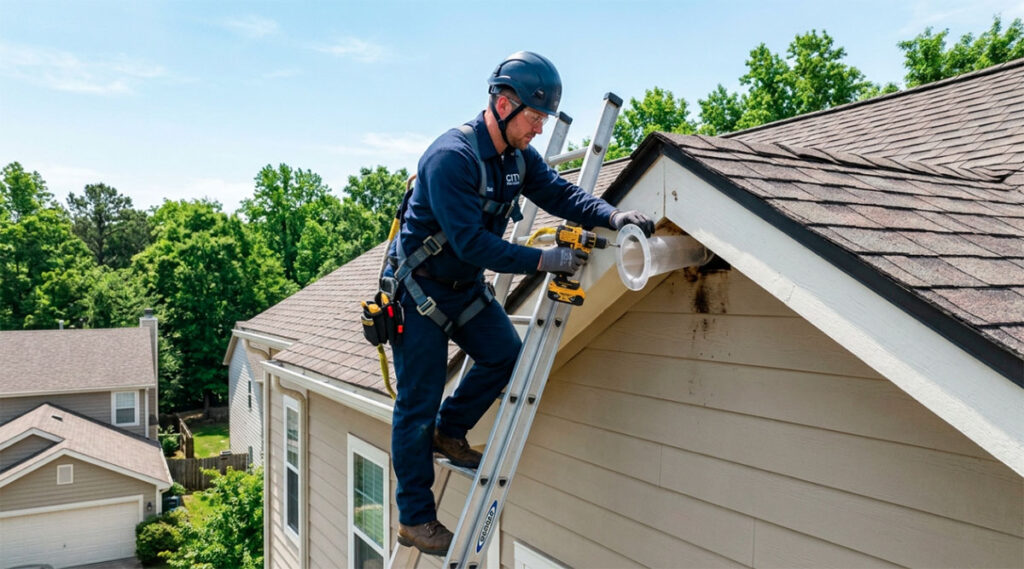
- Installing One-Way Doors: We install specialized one-way exclusion tubes, cones, or netting over the main, active entry points. When the bats leave at dusk to hunt, they easily slip out through the device. However, when they return at dawn, the device prevents them from re-entering the structure.
- Sealing the Perimeter: While the one-way doors are actively doing their job, we meticulously seal every other crack, gap, and potential secondary entry point on your home’s exterior using professional-grade sealants and exclusion materials. This ensures they can’t simply find a new way in.
- Final Removal and Sealing: Once we confirm that the entire colony has vacated your attic (which usually takes a few days to a week, depending on the weather), we remove the one-way doors and permanently seal the primary entry points.
Don’t Wait Until Winter!
While you can’t perform exclusion in early summer, you also shouldn’t wait too long into the late fall or winter. Once temperatures drop significantly, bats will begin to hibernate. Once they enter a state of torpor (deep sleep) for the winter, they stop flying out at night. If they are hibernating in your attic, exclusion becomes impossible until they wake up the following spring.
Take advantage of the late summer window! If you suspect you have bats in your Hamilton or Wenham home, contact Safer Nature Pest Control today for a professional, legal, and humane bat exclusion service.
Frequently Asked Questions (FAQ)
Is it illegal to kill bats in Massachusetts? Yes. Bats are a protected species in Massachusetts, and several species are endangered. It is highly illegal to kill them, use poisons on them, or trap them inhumanely.
When is bat maternity season in MA? Bat maternity season in Massachusetts typically runs from early June through the end of July. Exclusion cannot be performed during this time.
How much does bat removal cost? The cost of bat exclusion varies depending on the size of the home, the number of entry points that need sealing, and the severity of the infestation. Contact Safer Nature for a customized quote.