
The Hidden Dangers of Bat Guano in Your Attic and How to Clean It Safely
Discovering a bat colony in your attic is stressful enough, but getting the bats out is only the first half of the battle. Once a successful, humane bat exclusion has been performed by a professional, homeowners in Newburyport, Hampton NH, and across the North Shore are often left with a highly toxic and destructive mess: bat guano.
Guano (the scientific term for bat droppings) and bat urine can accumulate rapidly when a maternity colony has been roosting in your attic all summer. If left untreated, this biological waste poses severe health risks to your family and can cause massive structural damage to your home.
Here is an in-depth look at why you should never ignore bat guano, why you should never try to sweep it up yourself, and why professional cleanup and sanitization is absolutely critical.
The Primary Health Risk: What is Histoplasmosis?
The primary danger of bat guano lies not in the droppings themselves, but in a microscopic fungus that grows upon the decaying waste called Histoplasma capsulatum.
When dry bat guano is disturbed—whether by sweeping, vacuuming, moving boxes, or even just walking heavily through the attic—the microscopic fungal spores become airborne. If a human inhales these spores, it can lead to a severe respiratory infection known as Histoplasmosis.
Symptoms of Histoplasmosis mimic a harsh flu or pneumonia. Those infected may experience fever, dry cough, severe fatigue, body aches, and chest pain. For healthy adults, the infection may pass on its own, but for the elderly, young children, or those with compromised immune systems, the infection can spread beyond the lungs to other organs, becoming systemic and life-threatening.
Because your attic shares air with the rest of your home through soffit vents, recessed lighting fixtures, HVAC systems, and unsealed attic hatches, airborne spores in the attic can easily make their way down into the air you breathe in your living spaces.
Structural Damage to Your Massachusetts Home
Beyond the severe health risks, bat waste is highly corrosive and incredibly destructive to building materials. Bat urine contains exceptionally high concentrations of uric acid, which can easily eat through wood, metal fasteners, and drywall over time.
If a colony has been present for a season or more, you will likely face:
- Ruined Insulation: Guano and urine will compress, soak, and completely destroy the R-value (insulating capability) of your fiberglass or blown-in attic insulation. This leads to massive heat loss in the winter, resulting in much higher heating and cooling bills.
- Foul, Pungent Odors: The strong, ammonia-like smell of bat waste can permeate the wood joists and drywall, drifting down into your upper-level bedrooms. The smell often gets significantly worse on hot, humid summer days.
- Ceiling Stains: In severe, long-term infestations, the liquid waste can seep all the way through the attic floorboards and insulation, creating unsightly, foul-smelling brown stains on the ceilings of the rooms directly below.
Why DIY Cleanup is Extremely Dangerous
Given the severe risk of contracting Histoplasmosis, you should never attempt to clean up bat guano with a standard shop-vac, broom, or dustpan.
Sweeping guano instantly sends the fungal spores into the air. Furthermore, a regular household vacuum or shop-vac does not have the necessary filtration to trap microscopic spores; it will simply suck them up and blow them violently out of the exhaust port, dispersing the biohazard straight into the air you are breathing.
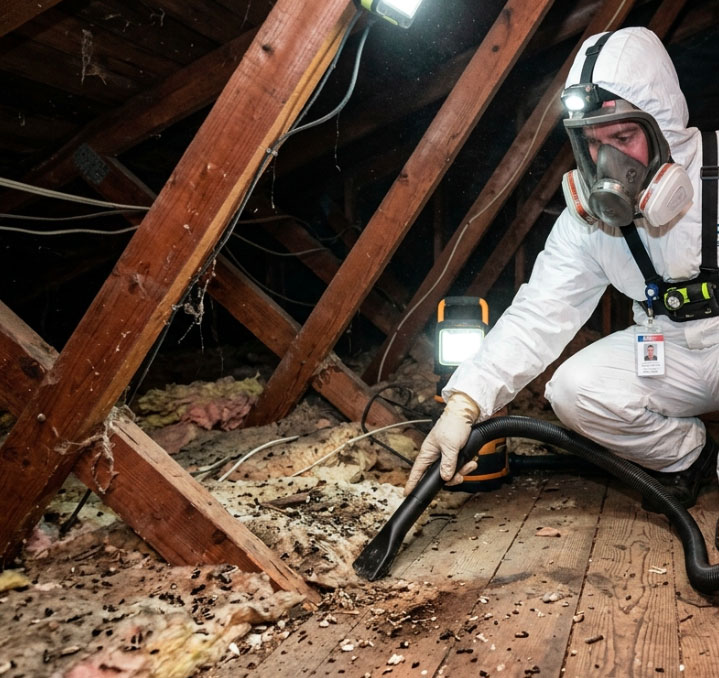
Proper cleanup requires full Personal Protective Equipment (PPE), including full-face respirators equipped with specific P100 particulate filters, disposable biohazard suits, and specialized commercial HEPA-filtered vacuums designed specifically for hazardous biological waste remediation.
Safer Nature’s Professional Attic Restoration
At Safer Nature Pest Control, we provide comprehensive bat exclusion and attic restoration services. Once we have legally and humanely evicted the bats from your property, our trained team gets to work on the safe cleanup:
- Safe Removal: Wearing full PPE, we carefully remove and bag all soiled insulation and accumulated guano using commercial HEPA vacuums, ensuring no spores escape into your home.
- Sanitization and Deodorization: We treat the entire attic space with professional-grade, eco-friendly enzymatic cleaners and hospital-grade disinfectants. This destroys the Histoplasmosis spores, eliminates the pheromones that might attract future bats, and neutralizes the foul odors permanently.
- Restoration Guidance: Once the space is clean and safe, we can advise on the process of replacing the ruined insulation to restore your home’s energy efficiency.
Don’t let the toxic aftermath of a bat infestation threaten your family’s health. If you’ve had bats in your home, contact Safer Nature Pest Control for professional, safe, and thorough attic sanitization.
Frequently Asked Questions (FAQ)
Can I get sick from smelling bat guano? While the ammonia smell is unpleasant, the actual disease (Histoplasmosis) is contracted by inhaling the airborne fungal spores, not just the odor. However, a strong odor indicates a large accumulation of guano, which increases the risk of airborne spores.
Will homeowners insurance cover bat guano cleanup? It depends entirely on your specific policy. Some insurance companies cover the cleanup and insulation replacement as “sudden and accidental damage,” while others classify it as a maintenance issue. You should consult your insurance agent.
How long does Histoplasmosis stay in the guano? The fungus can survive in dry bat guano for years. This is why even old, inactive roosts must be cleaned professionally.